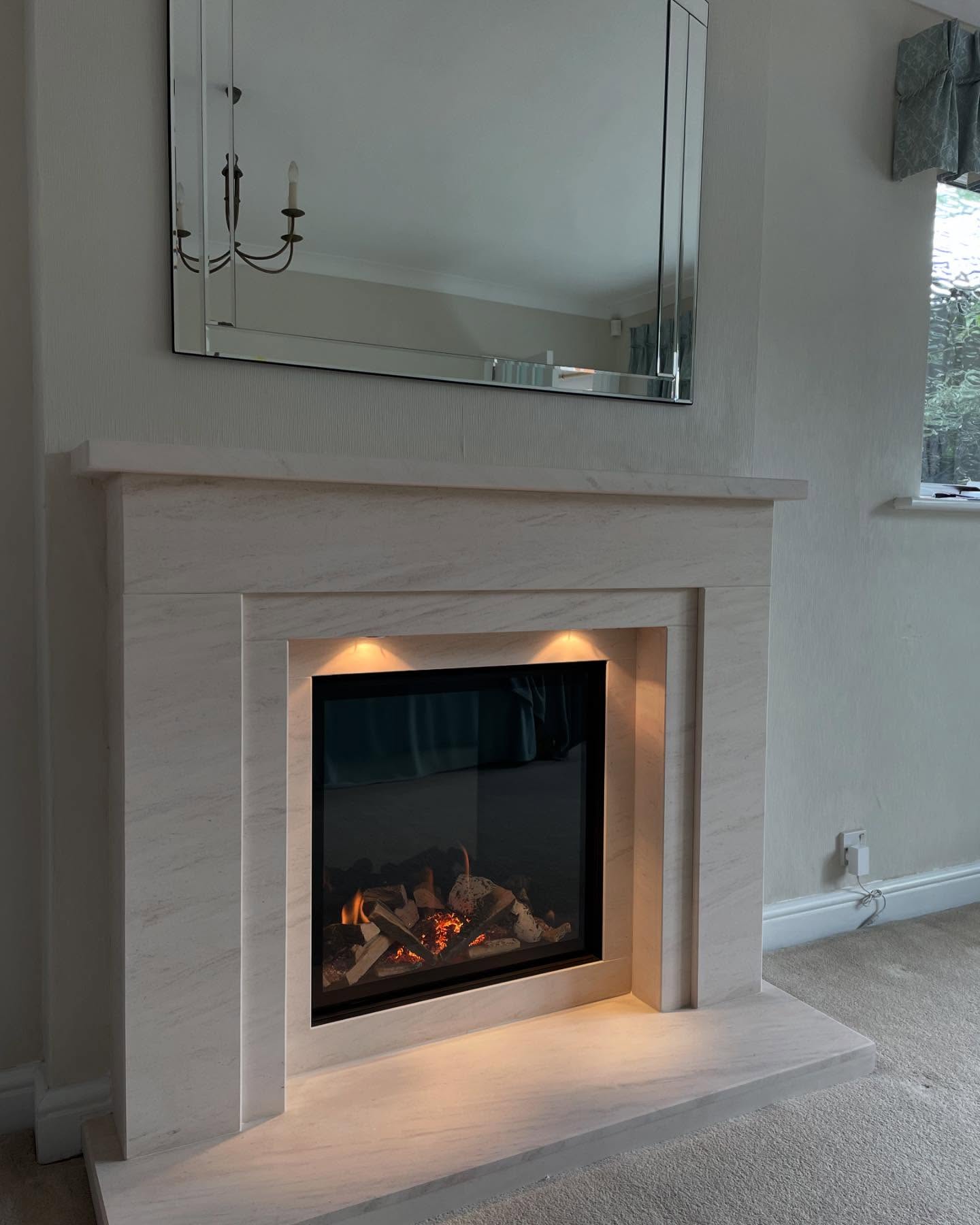
Whether you have just picked up the keys to a new-build or you’re looking to breathe new life into a period property, the fireplace remains the ultimate focal point of the British home. In 2026, however, the choice isn’t just about aesthetics – it’s about balancing rising energy costs with long-term home efficiency.
If you’re deciding between a gas or electric fire, this guide breaks down the essential differences to help you choose the right fit for your lifestyle and property.
1. Gas Fires: The High-Performance Choice
For many homeowners, a gas fireplace is the gold standard for heating. If you have an existing chimney or a gas connection, it provides a powerful supplemental heat source that can actually reduce your reliance on central heating.
Best for: Period homes with existing chimneys or large, open-plan living areas.
Heat Output: Significantly higher than electric, typically ranging from 3kW to 6kW.
The Experience: You get the authentic “soul” of a fire – real flickering flames and radiant heat that warms the fabric of the room, not just the air.
Installation: Requires a Gas Safe registered engineer. If you don’t have a chimney, you’ll need a “balanced flue” (a pipe through an external wall), which adds to the initial setup cost.
2. Electric Fires: The Modern Multi-Tasker
Electric fires have seen a massive surge in popularity, particularly for new-builds and “media wall” installations. They offer a “plug-and-play” simplicity that gas simply can’t match.
Best for: Modern flats, new-build homes without chimneys, and bedrooms.
Heat Output: Generally capped at 2kW, making them better suited for “zonal heating” (warming the immediate area) rather than an entire floor.
The Experience: While the flames are LED-based rather than real combustion, modern effects are incredibly realistic. Crucially, they offer a “flame-only” setting, allowing you to enjoy the cosy glow in the summer without any heat output.
Installation: Often a simple DIY job.1 If there is a standard 3-pin socket nearby, you can have your fire up and running in minutes.
2026 Running Costs: Gas vs Electric
With the January 2026 Energy Price Cap in effect, the cost gap between gas and electricity remains a key deciding factor. While electric fires are technically 100% efficient at the point of use, gas remains a significantly cheaper fuel per unit.
| Cost Component | Gas Fire (High Efficiency) | Electric Fire (LED) |
| Price per kWh | ~5.9p | ~27.7p |
| Hourly Cost (Full Heat) | ~30p – 40p | ~55p – 60p |
| Flame-Only Setting | Not possible | ~1p – 3p per hour |
| Annual Maintenance | ~£80+ (Gas Safe Service) | £0 (Self-clean) |
| Efficiency | 70% – 90% | 100% |
Pro Tip: If you only want the look of a fire for atmosphere, an electric model costs pennies to run. However, if you plan to use your fireplace as a serious heat source for hours every evening, gas will likely save you more on your monthly bills.
Key Considerations for Your Upgrade
For the New Homeowner (New Builds)
Many new homes are built with high levels of insulation and often lack a traditional chimney. In these properties, an electric fireplace versus gas is often the winner. The lower heat output of electric is actually a benefit in a highly insulated home, preventing the room from becoming uncomfortably hot.
For the Current Homeowner (Upgrading)
If you are replacing an old, inefficient gas fire or an open coal grate, a modern high-efficiency gas fire is a massive upgrade. Older gas fires often lost up to 75% of their heat up the chimney; modern glass-fronted models keep up to 90% of that heat in your room.
The Verdict: Gas or Electric?
Choose a Gas Fireplace if you want a reliable, powerful heat source to cut down on central heating use and you want the unmatched ambience of a real flame.
Choose an Electric Fireplace if you want a stylish, low-maintenance feature for a media wall, live in a home without a chimney, or want a “summer-friendly” fire that can glow without giving off heat.